


Mental Stimulation during your Pet's recovery

August 20, 2024

Brain Games can be just as satisfying as a run in the park for your recovering pet.
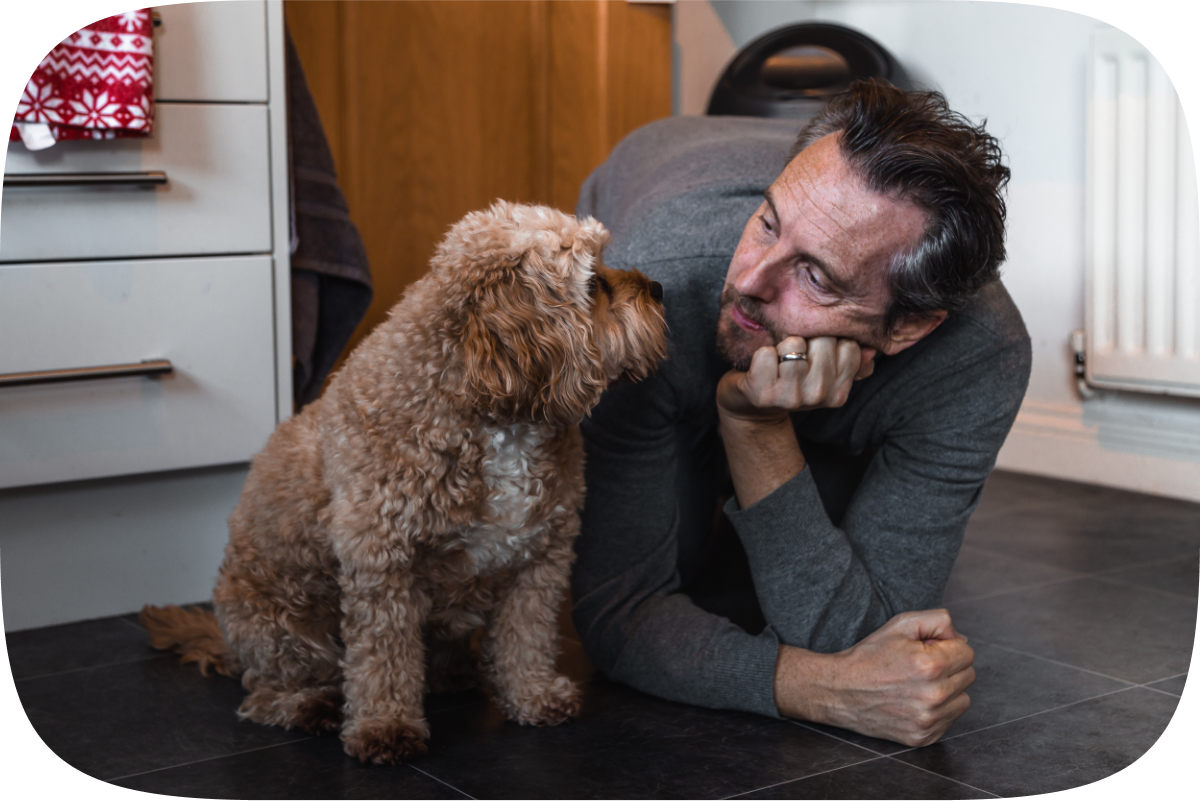
Do you worry about your pet getting "Cabin Fever" during their recovery? Fear Not! There are many things you can do to help keep your pet happy while they are resting.


Mental Stimulation for your Pet during their recovery period


Strict kennel rest is a very important part of your pet’s recovery following surgery. Unfortunately, this can be not only boring for your pet, but stressful as well. It has been shown that stress can slow the healing process. 


Behaviours that indicate a stress response

  • Lip/snout licking
  • Paw lifting
  • Trembling of the body
  • Yawning
  • Auto grooming
  • Vocalizations


Luckily, there are several things you can do to provide mental stimulation for your pet while they recover. These activities not only prevent boredom, but can aid in training and grow an even stronger bond with your furry companion.


https://www.youtube.com/watch?v=Tx9I2UrCChQ


  1. Puzzles - There are several varieties of puzzles you can find online or in pet stores. These involve your pet figuring out how to get a hidden treat.
  2. Frozen Ice treats or stuffed Kong toys- These should be packed with low fat options, as weight gain can put undue stress on healing bones.
  3. Egg Carton and Carboard box games.
  4. Take a 'Scent Walk" in which you allow your furry companion to stop and smell as many objects as they want. Sniffing has been shown to not only decrease stress in dogs, but it also releases dopamine, the “happy” brain chemical. These walks are less about the distance or time and more about quality, allowing them to take their time and explore the area they’re in. Some of the best settings for these walks have lots of grass, bushes, and trees. (But avoid areas with too many naughty temptations to run and jump!)
  5. Mix it Up! Try a new area to walk in, or even just a new direction. Keeping your friend guessing will add to the enjoyment of their walks.
  6. Scatter Feeding- Portion their meals and scatter them throughout a safe area of the house or yard for them to find by sniffing. This lets them feel like they are hunting their food :) Alternatively, Snuffle Mats can be used to keep this activity a bit more contained.


"I am astounded with the service and care! Absolutely top notch service! Thank you so much for helping our Brew!!!"

-Katelin Buchanan

We love receiving feedback from our clients about their experiences. It is our mission to provide accessible pet healthcare to our community, while ensuring the entire process is as smooth as can be.

Share

Read more

By Drea Sullivan December 11, 2025
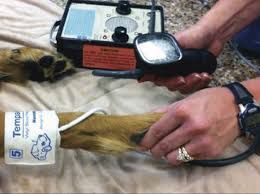
Things to Know: A Doppler value is generally considered to be the Systolic Arterial Pressure (SAP) Dopplers require the use of a Sphygnomometer and inflatable cuff. The width of the cuff should be: 40% of the limb circumference in dogs, and 30% of the limb circumference in cats. (I like to have a tape measure handy to eliminate the guess factor). A cuff that is TOO LARGE will falsely decrease the BP reading. A cuff that is TOO SMALL will falsely elevate the BP reading. Perform 4-6 readings and average the value to ensure replicable results. A Doppler BP reading does NOT provide a DAP (Diastolic Arterial Pressure) or MAP (Mean Arterial Pressure) in small animals - even cats. Transducer tubing should be directed away from the patient (down the leg), with the patient in lateral recumbency. The cuff is positioned on the limb which is at the level of the right atrium (Forelimb or hindlimb which is “up” not at the level of the table). Don’t overinflate the cuff- inflate to only 20-40 mmHg above when the pulse sound disappears. Overinflation can cause falsely elevated results. Advantages: Doppler ultrasonography has several advantages when compared with other blood pressure monitoring techniques: Provides Audible pulse to aid in anesthesia monitoring Do not assume that if you can hear it, the blood pressure is good! You have to check it routinely and establish trends. Relatively easy to use. Affordable and readily available in most clinical settings. Appropriate to use in patients experiencing the following: significant hypotension, cardiac arrhythmias - tachycardia, bradycardia, arrhythmias, Vasoconstriction, Hypothermia More reliable in small animals (Neonates, cats, small dogs, exotics) than oscillometric techniques Can be used in awake patients for a pre-anesthetic BP reading Oscillometric techniques are not usually reliable with any form of patient movement. Disadvantages: Obtaining Doppler measurements in patients with severe peripheral vasoconstriction (Hypovolemia, shock, severe hypothermia) can be difficult but this is true for all methods. A Doppler may fail to provide a reliable reading when the patient's Systolic Arterial Pressure (SAP) falls below 80-90 mmHg in a dog, and 60-70 mmHg in a cat. Monitoring patient trends is extremely important as intervention should occur before the SAP falls to this level. Resources: https://todaysveterinarypractice.com/cardiology/todays-technician-blood-pressure-monitoring-from-a-nursing-perspective-part-2-blood-pressure-monitoring-techniques/#:~:text=75%20mm%20Hg-,Mean%20arterial%20pressure,TABLE%202. https://www.sciencedirect.com/science/article/abs/pii/S1467298719303174#:~:text=The%20agreement%20between%20ABPDoppler,1998). https://pmc.ncbi.nlm.nih.gov/articles/PMC7838334/ https://www.vin.com/apputil/content/defaultadv1.aspx?pId=11290&id=4252629#:~:text=4%2C5,the%20direct%20blood%20pressure%20monitor.
August 20, 2024
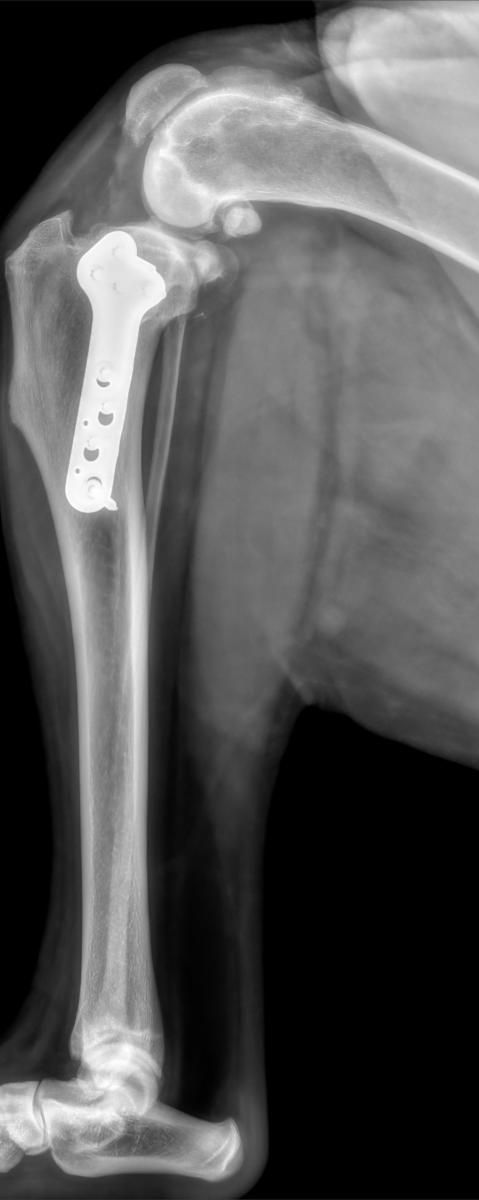
Tibial Plateau Leveling Osteotomy
By Joni Klaassen, RVT June 11, 2024
Coming home after surgery is exciting!